
 Home
Home JCT
JCT  Oct 23,2025
Main Functions of Reactor Sandblasting
1. Removal of surface impurities and oxide layers
Sandblasting thoroughly removes rust, scale, welding slag, oil stains, and old coatings from the reactor surface, restoring the metal surface to its pristine metallic color and laying a good foundation for subsequent anti-corrosion or enameling processes.
2. Increased surface roughness
After sandblasting, a uniform, finely textured surface is formed on the reactor surface, facilitating the mechanical bonding and adhesion of coatings, enamels, rubber linings, or paints to the metal substrate.
3. Improved corrosion resistance
Removal of impurities creates a cleaner metal surface, reducing potential corrosion points and extending the reactor's service life in acidic, alkaline, and solvent environments.
4. Insoection for weld defects
Sandblasting clearly reveals the weld surface, making it easier to detect defects such as pores, cracks, and slag inclusions, facilitating subsequent non-destructive testing.
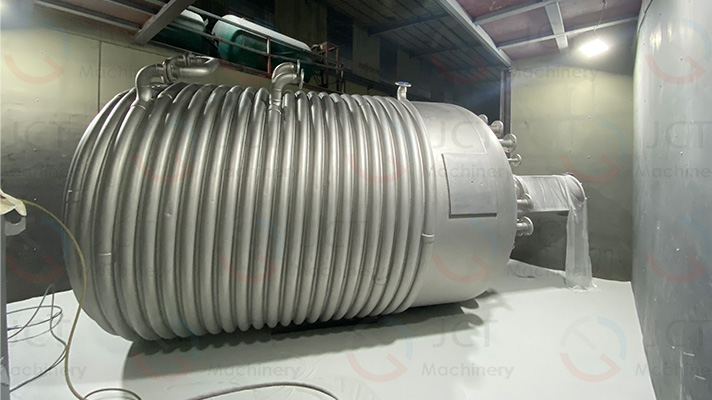
Significance of Sandblasting for Differenct Types of Reactor
| Type | Purpose |
| Stainless steel reactor | Removes processing residues, welding slag, and oxide layers, preventing impurities from entering the material and ensuring cleanliness |
| Carbon steel reactor (paint/enamel required) | Enhances the adhesion of enamel or anti-corrosion coatings, preventign enamel peeling |
| Rubber-lined or fluorine-lined reactor | Increases the bonding strength of adhesive layers or fluoroplastics, preventing bulging and peeling |
Industry Standards for Sandblasting
- Sa1: Light cleaning - Removes loose oxide layers, rust and impurities.
- Sa2: Industrial cleaning - Removes most oxide layers and rust.
- Sa2.5: Nearly white cleaning (commonly used) - Almost completely clean, with only slight shading.
- Sa3: White cleaning - Completely cleans the metal surface, the most thorough blasting grade.
 Precautions When Producing Resin