
 Home
 JCT
 Nov 13,2026

Why Are Chemical Reactors Used in Resin Manufacturing?
Chemical reactors are essential equipment in resin manufacturing because they provide a controlled environment for chemical reactions, heating, mixing, and temperature regulation. From alkyd resin and epoxy resin to acrylic resin and unsaturated polyester resin, different resin production processes require specific reactor configurations to achieve the desired product properties.
As an industrial chemical equipment manufacturer, JCT Machinery provides customized reactor solutions for resin production, including vessel fabrication, agitator configuration, heating and cooling systems, and auxiliary equipment. Understanding why chemical reactors are used in resin manufacturing helps producers select suitable equipment for their production processes.
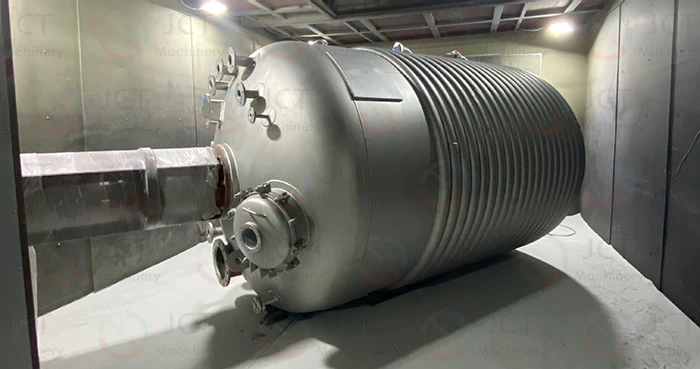
1. Why Does Resin Manufacturing Require Chemical Reactors?
Resin manufacturing involves various chemical processes, such as esterification, condensation, polymerization, and other synthesis reactions. These processes often require controlled temperature, continuous or intermittent mixing, and specific reaction conditions.
A chemical reactor integrates several important functions into one vessel, helping manufacturers manage these production requirements.
1.1 Providing a Controlled Reaction Environment
During resin production, multiple raw materials are introduced into the reactor according to a specific formulation and process sequence. The reactor provides an enclosed processing space where the materials can react under controlled operating conditions.
Depending on the resin formulation, the reaction process may involve heating, mixing, controlled feeding, and the removal of reaction by-products.
A properly designed reactor helps maintain consistent operating conditions throughout the production cycle.
1.2 Controlling Reaction Temperature
Temperature is one of the most important parameters in resin synthesis. It affects reaction speed, molecular structure, viscosity, and the final properties of the resin.
Industrial chemical reactors can be equipped with different heating and cooling systems according to the process requirements:
- Thermal oil heating: Suitable for processes requiring controlled heating at elevated temperatures.
- Steam heating: Used in production processes where steam is an appropriate heat source.
- Electric heating: Provides an alternative heating method for specific reactor configurations.
- Cooling water circulation: Helps remove reaction heat and control temperature.
- Jacket or coil systems: Provide heat transfer between the heating or cooling medium and the reactor contents.
For example, alkyd resin production involves esterification reactions that require controlled heating. An appropriately designed reactor heating system helps maintain the required reaction temperature throughout the process.
1.3 Ensuring Effective Material Mixing
Resin formulations may contain different raw materials with varying densities, viscosities, and chemical properties. Effective mixing is important for achieving uniform material distribution and supporting consistent reaction conditions.
A chemical reactor can be equipped with different agitator configurations, including:
- Anchor agitators: Commonly used for viscous materials and applications requiring wall-area circulation.
- Frame agitators: Suitable for certain medium- and high-viscosity materials.
- Paddle agitators: Used for general liquid mixing applications.
- Customized agitators: Designed according to material viscosity, vessel dimensions, and process requirements.
The appropriate agitator structure, rotational speed, and motor power should be determined according to the actual material characteristics and mixing objectives.
1.4 Supporting Vacuum and Condensation Processes
Some resin synthesis processes generate water, solvents, or other volatile substances that need to be removed or recovered during production.
Depending on the process, a chemical reactor may be connected to auxiliary equipment such as:
- Vacuum systems
- Condensers
- Vapor-liquid separators
- Pressure control equipment
- Safety relief devices
For example, certain alkyd resin and unsaturated polyester resin processes generate water during condensation reactions. A condenser and separation system can help remove the generated water from the reaction process.
The configuration of vacuum and condensation systems depends on the specific resin formulation and production technology.
2. What Types of Resins Can Be Produced Using Chemical Reactors?
Chemical reactors are widely used in different resin manufacturing industries. However, each resin type has its own reaction mechanism and processing requirements. Therefore, reactor structures and auxiliary systems should be selected according to the production process.
2.1 Alkyd Resin Production
Alkyd resin is commonly used in paints, coatings, and protective finishes. Its production generally involves esterification and related chemical reactions using polyols, polybasic acids or anhydrides, and fatty acids or oils, depending on the formulation.
During production, the reactor needs to provide controlled heating and effective mixing. Condensation water generated during the reaction may need to be removed through a suitable condensation and separation system.
Typical equipment configurations include:
- Jacketed or coil-heated reaction vessels
- Suitable agitator systems
- Condensers and water separators
- Temperature monitoring and control systems
- Feeding and discharge connections
2.2 Epoxy Resin Production
Epoxy resin manufacturing involves different synthesis routes depending on the required resin type and formulation. Some processes involve reactions between epoxy compounds and other chemical raw materials under controlled temperature conditions.
Reactor selection should consider chemical compatibility, temperature requirements, mixing performance, sealing arrangements, and the operating pressure of the process.
2.3 Acrylic Resin Production
Acrylic resin is widely used in coatings, adhesives, inks, and other industrial applications. Many acrylic resin manufacturing processes involve polymerization of acrylic or methacrylic monomers.
Temperature control is particularly important because polymerization reactions may generate heat. The reactor should therefore have an appropriate heating and cooling system to maintain the required reaction conditions.
Agitator design, raw material feeding, and temperature monitoring are also important considerations.
2.4 Unsaturated Polyester Resin Production
Unsaturated polyester resin is commonly used in fiberglass-reinforced plastics, composite materials, and industrial molding applications.
Its manufacturing process generally involves condensation reactions between polyols and unsaturated polybasic acids or anhydrides.
The reactor may require heating, effective mixing, and a condenser system to handle water generated during the reaction. Additional equipment depends on the specific formulation and production process.
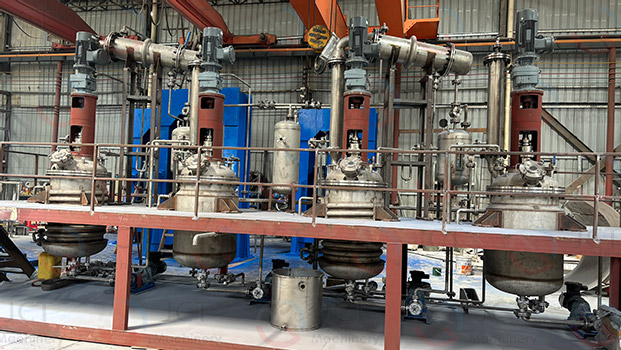
3. Key Reactor Configurations for Resin Manufacturing
When selecting a chemical reactor for resin production, manufacturers need to consider more than vessel capacity. The vessel structure, agitator, heat-transfer system, and auxiliary equipment all influence the suitability of the reactor for a particular process.
| Reactor Component | Main Function | Selection Considerations |
|---|---|---|
| Reactor Vessel | Provides the reaction space | Capacity, material, operating temperature and pressure |
| Agitator System | Mixes raw materials and supports uniformity | Viscosity, mixing requirements and rotational speed |
| Heating System | Provides the required reaction temperature | Heat source, temperature range and heat-transfer efficiency |
| Cooling System | Removes excess reaction heat | Cooling capacity and process requirements |
| Condenser | Condenses vapors generated during processing | Vapor composition and condensation requirements |
| Vacuum System | Provides reduced-pressure operating conditions | Required vacuum level and process compatibility |
| Control System | Monitors and regulates operating parameters | Temperature, pressure, speed and process sequence |
Not every resin reactor requires all of these components. The final configuration should be determined by the customer's production process and technical specifications.
4. How to Choose the Right Chemical Reactor for Resin Production
Choosing a suitable resin manufacturing reactor requires a clear understanding of the raw materials, reaction process, and expected production capacity.
4.1 Determine the Resin Type and Production Process
Different resin types involve different chemical reactions. Before selecting a reactor, manufacturers should identify the resin formulation, reaction route, processing sequence, and required operating conditions.
4.2 Select the Appropriate Reactor Capacity
Reactor capacity should be determined according to batch production volume, raw material proportions, operating space requirements, and the expected production schedule.
The working volume should not be confused with the total vessel volume. Sufficient space must be considered for mixing, material expansion, and process requirements.
4.3 Match the Agitator to Material Viscosity
Material viscosity can change significantly during resin synthesis. The agitator should be selected according to the viscosity range, material circulation requirements, and mixing performance needed at different production stages.
4.4 Configure the Heating and Cooling System
The heating and cooling system should match the required temperature range, heat-transfer medium, reaction heat, and production cycle.
For processes involving heat-generating reactions, cooling capacity and temperature monitoring are especially important.
4.5 Consider Auxiliary Equipment and Production Line Integration
A resin manufacturing project may require more than one reaction vessel. Depending on the production process, additional equipment may include:
- Raw material storage tanks
- Measuring and feeding tanks
- Mixing and reaction vessels
- Condensers and separators
- Vacuum systems
- Filtration equipment
- Finished product storage tanks
For customers establishing a new resin manufacturing facility, integrating these machines into a complete production line can help coordinate material transfer and production operations.
5. JCT Machinery: Customized Chemical Reactors for Resin Manufacturing
JCT Machinery is an industrial mixing and chemical equipment manufacturer providing customized equipment solutions for adhesive, resin, and chemical production.
We understand that different resin manufacturing processes require different equipment structures and configurations. Therefore, reactor solutions can be designed according to customer requirements, including:
- Customized reactor capacity and vessel structure
- Material selection based on chemical compatibility
- Agitator configuration according to material viscosity
- Heating and cooling system design
- Vacuum and condensation system configuration where required
- Auxiliary equipment and production line integration
In addition to individual chemical reactors, JCT Machinery can provide turnkey resin production line projects according to customer requirements.
For alkyd resin manufacturing projects, for example, the equipment configuration can be planned around raw material handling, reaction, condensation, water separation, and finished product storage, depending on the customer's process design.
Customers can also send raw materials to our factory for equipment trials. On-site and video-witnessed testing are supported to help evaluate equipment suitability before purchasing.
Whether you need an individual resin reaction vessel or a customized resin production line, our team can discuss your process requirements and recommend an appropriate equipment configuration.
Conclusion
Chemical reactors are essential in resin manufacturing because they provide the controlled environment required for chemical reactions, heating, mixing, and temperature regulation.
From alkyd resin and epoxy resin to acrylic resin and unsaturated polyester resin, each production process requires a reactor configuration that matches its specific reaction conditions and material characteristics.
Choosing the right reactor involves evaluating vessel capacity, material compatibility, agitator design, heating and cooling systems, and auxiliary equipment.
Working with an experienced equipment manufacturer can help resin producers develop a reactor solution that meets their production requirements and supports future manufacturing needs.
Contact JCT Machinery to discuss your resin manufacturing process and explore customized chemical reactor and turnkey production line solutions.
Frequently Asked Questions
1. Why is a chemical reactor necessary for resin production?
A chemical reactor provides a controlled environment for resin synthesis, including heating, mixing, temperature regulation, and other process operations required by the formulation.
2. What types of resin can be produced in a chemical reactor?
Chemical reactors are used in the production of alkyd resin, epoxy resin, acrylic resin, unsaturated polyester resin, and other resin products. Reactor configurations depend on the specific synthesis process.
3. What type of agitator is suitable for resin production?
Anchor, frame, paddle, and customized agitators can be used depending on material viscosity, vessel dimensions, and mixing requirements. The appropriate design should be determined through process evaluation.
4. Why do resin reactors need heating and cooling systems?
Heating systems provide the temperature required for chemical reactions, while cooling systems help remove excess heat and maintain the desired operating temperature.
5. Can JCT Machinery provide a complete resin production line?
Yes. JCT Machinery can provide customized resin production line equipment solutions according to customer project requirements, including reaction vessels and related auxiliary equipment.
 What Is the Difference Between a Resin Reactor and a Mixing Tank?