
 Home
 JCT
 Oct 27,2026

Choosing the right resin reactor is an important step in building an efficient and reliable resin production process. The reactor directly affects heating efficiency, mixing performance, temperature control, product consistency, and overall production capacity.
However, not every resin manufacturing process requires the same reactor design. Different resin formulations, viscosities, reaction temperatures, and production scales may require different vessel structures, agitators, and heating systems.
Identify the Type of Resin You Want to Produce
The first step in resin reactor selection is identifying the resin type and understanding its production process. Different resins have different reaction characteristics and equipment requirements.
Common resin applications include:
-
Epoxy resin: Reactor systems designed to meet the required reaction conditions, mixing performance, and temperature control requirements.
-
Alkyd resin: Often requires controlled heating, effective agitation, and, depending on the process, a condenser and water separation system.
-
Acrylic resin: May require accurate temperature control, suitable agitation, and process-specific reflux or condensation equipment.
-
Urea-formaldehyde resin: Typically requires careful control of reaction temperature, pH, and other process parameters.
-
Unsaturated polyester resin: May require a reactor with appropriate heating, agitation, condensation, and cooling capabilities.
-
Polyester polyol: Requires equipment designed around the formulation, operating temperature, viscosity, and reaction conditions.
These are general considerations rather than fixed equipment configurations. The final design should be determined by the actual formulation and process requirements.
Before choosing a reactor, clarify the raw materials, production steps, operating temperature, viscosity changes during the reaction, and any special operating requirements.
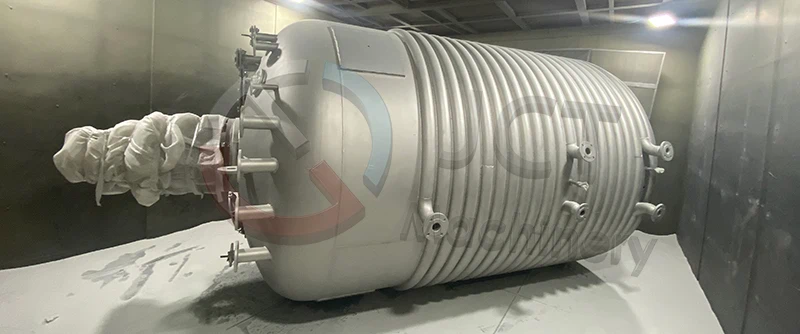
Determine the Required Production Capacity
Production capacity is another important factor in resin reactor selection. A reactor that is too small may limit output, while an oversized reactor can increase equipment costs and make small-batch production less economical.
When evaluating reactor capacity, consider:
-
Required batch output
-
Total vessel volume and usable working volume
-
Number of batches planned per day
-
Heating and cooling time
-
Material expansion, foaming, or other process characteristics
-
Future production expansion
The nominal volume of a reactor is not the same as its usable working volume. The appropriate filling level depends on the material and process, so capacity should be calculated according to the actual production requirements.
For manufacturers planning to expand their operations, it is also worth considering whether the reactor can be integrated into a larger production line in the future.
Choose the Right Heating and Cooling System
Temperature control is essential in many resin manufacturing processes. Insufficient heating capacity may extend batch times, while poor temperature uniformity can affect reaction stability and product quality.
Common reactor heating options include:
Jacket heating
A heating medium circulates through the reactor jacket to transfer heat to the material. Jacket heating is suitable for many processes where indirect heating and controlled temperature management are required.
Internal coil heating
A heat-transfer coil is installed inside the vessel. Depending on the design, it can provide additional heat-transfer area, but the coil arrangement must also consider cleaning, material flow, and potential product buildup.
Thermal oil, steam, or electric heating
The appropriate heating source depends on the required operating temperature, available utilities, process design, and operating costs.
Cooling may also be necessary to control exothermic reactions or reduce the product temperature before discharge. The cooling method and capacity should be matched to the process heat load and required cooling time.
When comparing reactor options, ask the manufacturer to evaluate the required heating and cooling performance rather than choosing a system based on the heating method alone.
Select an Agitator Suitable for Your Resin
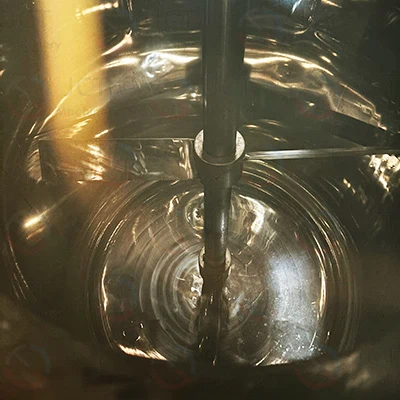
The agitator plays a major role in mixing efficiency, heat transfer, and product consistency. The correct design depends on material viscosity, flow behavior, reaction requirements, and changes in viscosity during production.
Common agitator options include:
-
Anchor agitator: Suitable for many viscous materials and processes requiring bulk circulation near the vessel wall.
-
Frame agitator: Provides broad mixing coverage and can be suitable for certain viscous materials.
-
Paddle agitator: Used in processes where its flow pattern and mixing action match the material requirements.
-
Combined agitator systems: Multiple mixing elements may be used when the process requires different mixing actions at different stages.
No single agitator is ideal for every resin. For example, a formulation that becomes highly viscous during the reaction may require a different agitator configuration and drive system from a low-viscosity material.
When discussing your project with a reactor manufacturer, provide information about the initial and final viscosity, mixing requirements, and any changes in material behavior during the reaction.
Decide Whether You Need a Complete Resin Production Line
For many manufacturers, purchasing a reactor is only one part of building a resin manufacturing facility. The production process may also require storage tanks, dosing systems, condensers, receivers, transfer pumps, filtration equipment, cooling systems, and control systems.
A complete resin production line can help coordinate the equipment layout, material transfer, process sequence, and control strategy.
Depending on the resin type and production process, a line may include:
-
Raw material storage and feeding equipment
-
Resin reactor with a suitable heating and agitation system
-
Condenser and receiver or water separation equipment, where required
-
Metering and transfer systems
-
Filtration and discharge equipment
-
Electrical controls and instrumentation
-
Supporting utilities and safety systems
The exact configuration varies by application. For example, an alkyd resin production line and an epoxy resin production line may require different process equipment and operating arrangements.
If you are planning a new factory or upgrading an existing facility, consider working with a manufacturer that can provide customized equipment and turnkey resin production line solutions. This can help reduce coordination between multiple suppliers and improve integration between process stages.
JCT Machinery provides customized resin reactors and resin production line turnkey solutions for different manufacturing applications. From individual reactors to integrated production systems, we can discuss your process requirements and help you identify a suitable equipment configuration.
Tel: +86-181 3837 3963 (Whatsapp, Wechat)
Email: george820606@gmail.com
 Which manufacturer provides alkyd resin production line turnkey project?